
In today’s rapidly evolving business landscape, where competition is stiffer than ever and technology cycles are measured in months instead of years, one common denominator continues to distinguish successful companies from the rest: the ability to make informed, data-driven decisions. The days when business leaders relied solely on intuition or traditional forecasting methods are long gone. In our era of digital transformation, the most competitive businesses are those that not only collect data—but also harness its full potential through advanced analytics.
Data analytics has emerged as one of the most critical tools for organizations looking to improve operational efficiency, understand their customers better, and develop stronger marketing strategies. By turning raw data into actionable insights, companies can stay agile, anticipate market changes, and capitalize on opportunities before their competitors even see them. As such, analytics is no longer seen as a nice-to-have; it has become an indispensable part of strategic business planning.
This shift towards analytics-first thinking is not limited to any particular size or type of business. From small and medium-sized businesses looking to improve their web performance, to startups developing new mobile apps, and enterprises that rely on automation and real-time reporting, the ability to gather, analyze, and act on information is central to modern success. Companies like Knockout Media are helping bridge this capability gap by offering comprehensive data research and analytics services that empower organizations to act smarter—and more swiftly—than ever before.
To understand the real-world implications of analytics, consider this scenario: A retail business notices that despite increasing digital marketing spend, its online conversions are stagnating. Without access to robust analytics, it might continue funneling money into ineffective campaigns, leading to wasted resources and missed revenue targets. However, with deep insights into user behavior, traffic sources, and performance across devices, this business could quickly identify the bottlenecks—perhaps a poor mobile experience or unoptimized landing pages—and take appropriate corrective action. That real-time course correction not only conserves ad dollars but could dramatically improve sales.
These kinds of strategic pivots are made possible through advanced analytics, particularly techniques that marry data collection with visualization and prediction—two areas that Knockout Media specializes in. Whether it's optimizing a digital storefront, tracking mobile app engagement, or tailoring content based on consumer behavior, analytics serve as the navigational compass that guides businesses through uncertainty and toward profitability.
Moreover, as companies expand their digital footprints—launching apps, building websites, leveraging interactive media, and striving to rank higher on search engines—the volume and complexity of data they collect grows exponentially. These data points need more than just dashboards; they need interpretation, segmentation, and contextualization. This is where partnering with a firm that offers both technical and strategic expertise, such as Knockout Media’s full-service digital solutions, becomes not just beneficial—but necessary.
Perhaps the most important aspect of introducing analytics into decision making is its ability to move organizations from a reactive posture—responding to customer complaints or poor quarterly results—to a proactive and even predictive stance. Modern data analytics tools can identify trends before they fully emerge, spot minor fluctuations in customer behavior that hint at larger shifts, and suggest tactics that align with long-term business goals. These are massive advantages in high-stakes environments, where even slight missteps can lead to significant loss in revenue or reputation.
Of course, making such informed decisions doesn't require owning a massive internal analytics department. Thanks to scalable solutions offered by digital service providers like Knockout Media, even smaller businesses can now access powerful analytics platforms and deeply personalized reports tailored to their industry and market segment. Through continuous monitoring, real-time visualization, and data integration from multiple touchpoints—websites, CRM systems, social platforms, and more—even resource-constrained businesses can operate with the kind of clarity and foresight once reserved for Fortune 500 companies.
Ultimately, data analytics isn’t just about numbers; it’s about narratives. Numbers tell stories—stories about churn, sales, growth, satisfaction, inefficiencies, and unmet demand. The art of analytics lies in decoding these stories and framing them into strategies. Business executives and marketers who can identify patterns, understand metrics, and adapt strategies based on real-time insights not only make better decisions—they evolve into true market leaders.
As this article progresses, we’ll dive deeper into the mechanics of business data analytics, exploring what it entails, how it is implemented, and what tools and methodologies are leading the industry. We'll also explore case studies and practical examples to illustrate how analytics are being used across domains including software development, mobile applications, SEO strategy, and interactive media experiences. Industries that once operated in silos—marketing, IT, operations, and customer service—are now aligning under the shared goal of data-informed strategy, and once you understand the building blocks of analytics, you can do the same.
The integration of data analytics into daily business operations is no longer a luxury or a major corporate initiative that only the largest companies can afford. It’s a necessity and a competitive differentiator. Whether you’re looking to enhance your website’s performance, fine-tune your marketing spend, or unlock the hidden value in your company’s operational data, the key lies in analytics. And that journey starts with understanding what business data analytics truly is.
What is Business Data Analytics?
In a data-driven age, businesses are inundated with vast volumes of information — from customer behaviors and purchase history to supply chain logistics and campaign performance metrics. Business Data Analytics refers to the process of collecting, processing, interpreting, and visualizing this data to support strategic decision making and operational improvement. It is the compass by which modern organizations navigate a highly competitive and fast-paced marketplace.
Gone are the days when decisions were made purely on intuition or experience. Today, data analytics enables companies to uncover trends, predict outcomes, and tailor their strategies with a higher degree of precision. Whether it’s refining a marketing campaign, optimizing logistics, or improving customer retention, the goal of Business Data Analytics is to transform raw data into actionable insights.
Data analytics in business is often structured around four main types:
- Descriptive Analytics: This form of analytics answers the question "What happened?" by summarizing historical data and revealing performance patterns.
- Diagnostic Analytics: Delving deeper, diagnostic analytics explains why something happened through correlation, drilling down into trends, and detecting anomalies.
- Predictive Analytics: Using models and forecasting techniques, this type anticipates what is likely to happen based on historical data trends.
- Prescriptive Analytics: Offering recommendations for next steps, prescriptive analytics helps businesses decide what to do based on predictive insights and scenario testing.
How Companies Use Data to Improve Operations and Marketing
Businesses at every level—from startups to global enterprises—use data-driven strategies to sharpen their competitive edge. Here’s how data analytics makes a measurable impact on daily operations and marketing initiatives:
Operational ImprovementsThrough analytics, companies streamline workflows, reduce waste, and allocate resources more effectively. For example, logistics departments can analyze delivery times and optimize routes using GPS and weather data, significantly cutting down on transportation costs. Manufacturers can monitor machine performance in real time, proactively identifying and resolving maintenance needs to avoid costly downtime. In human resources, data can identify hiring trends, skill gaps, and employee retention patterns, allowing for a more aligned talent strategy.
Custom software solutions, like those offered through Knockout Media’s digital services, often integrate real-time analytics dashboards. These tools give managers critical insights into business performance across departments—whether it’s sales results, inventory levels, or service response times—allowing them to pivot quickly when necessary.
Marketing OptimizationIn the realm of marketing, data analytics is nothing short of transformative. Campaigns no longer rely on broad messaging and guesswork. Instead, businesses can leverage customer data to create personalized, targeted campaigns that speak directly to the needs and interests of distinct audience segments. With customer journey analytics, businesses can track how users interact with their website or app, adjusting elements such as navigation paths, call-to-action buttons, or content layout to reduce drop-off and increase conversions.
Businesses that utilize search engine optimization (SEO) techniques, supported by robust analytics, can measure keyword performance, assess bounce rates, and track traffic sources to optimize their content strategies. Additionally, A/B testing tools powered by data enable marketers to experiment with design and messaging elements, ensuring only the most effective versions reach the broader audience.
Data also helps marketers identify their most profitable acquisition channels. Whether it’s paid search ads, organic search, email campaigns, or social media, analytics tools attribute revenue to the appropriate sources, allowing budget reallocation toward the highest-performing channels. This kind of informed decision-making ensures the maximum return on marketing investment.
Data Analytics in Practice: Real-World Applications
Let’s look at practical examples of how businesses use data analytics to transform their operations and marketing strategies:
- E-commerce: Online retailers track customer browsing patterns, time spent on-page, cart abandonment rates, and repeat visit frequencies. This data is used to retarget customers, suggest personalized product recommendations, and offer time-sensitive discounts that drive sales.
- Healthcare: Clinics and hospitals use analytics to monitor patient outcomes, manage appointment scheduling, and predict health trends such as flu outbreaks using AI models built on historical data.
- Education: Universities and institutions use data visualization and analytics software—like those offered through Knockout Media’s advanced analytics tools—to monitor student performance, course effectiveness, and research funding allocation.
- Hospitality and Travel: Hotels and airlines rely on predictive analytics for yield management, adjusting prices in real-time based on demand forecasting, competitor pricing, and booking patterns.
These are just a few examples, but they capture an essential truth: companies who invest in their data infrastructure and analytics capabilities significantly outpace competitors who do not.
Setting the Stage for KPIs
The true power of business data analytics comes to life when it is aligned with clear business objectives and measurable outcomes. As companies mature in their analytics journey, they begin to use data not just to understand the past, but to influence the future by tracking Key Performance Indicators (KPIs). These indicators serve as the benchmarks of success, guiding decisions and measuring progress toward goals.
With platforms that integrate analytics directly into web and mobile applications, businesses can monitor real-time KPIs, adjust operations dynamically, and ensure they are consistently working towards impactful outcomes. Whether you're a startup looking to launch a new product or an established enterprise seeking operational excellence, partnering with a holistic digital solutions provider like Knockout Media can provide the analytic backbone your business needs.
In the following section, we’ll explore how tracking Key Performance Indicators plays a pivotal role in converting data into strategic direction—and how businesses can set KPIs that drive growth, performance, and innovation.
Tracking Key Performance Indicators (KPIs) to Drive Smart Business Decisions
In today’s competitive digital environment, data analytics has become the cornerstone of effective business decision-making. One of the most actionable and impactful ways businesses are tapping into data insights is through the tracking of Key Performance Indicators (KPIs). KPIs are measurable values that reflect the performance of an organization against its objectives. By leveraging the right KPIs, businesses gain clarity, focus, and direction—all essential components in driving sustainable growth.
At Knockout Media, we understand that each business is unique, and therefore the metrics that define success vary widely across industries and sectors. Whether you’re a small business measuring marketing effectiveness or a large enterprise tracking operational efficiency, identifying and monitoring your core KPIs provides a data-driven foundation for informed decision-making, strategic pivoting, and continuous improvement.
Why KPIs Matter: Measuring Success and Progress
KPIs serve as a quantifiable lens through which businesses can evaluate success. They are not just numerical summaries, but powerful indicators that offer insights into strategic areas such as revenue growth, customer engagement, operational efficiency, and digital presence. These metrics form the basis for performance reviews, budgeting, marketing strategies, and even investor relations.
Consider, for example, a company that has launched a brand-new custom-designed website. Initial excitement may be high, but without measuring key data like bounce rates, conversion rates, average session duration, and traffic sources, it’s nearly impossible to assess whether the website is effectively driving business outcomes. Measuring KPIs answers the crucial questions: Is the website helping generate leads? Are customers engaging with the content? Is the call-to-action prompting conversions?
Key Categories of KPIs for Modern Businesses
Depending on the nature and objectives of your business, KPIs may span multiple categories. Below are some of the most vital KPI categories that today’s high-performing businesses monitor:
- Financial KPIs: Revenue, profit margins, cash flow, operating expenses, and ROI
- Customer KPIs: Customer acquisition cost (CAC), customer lifetime value (CLV), retention rate, and churn rate
- Marketing KPIs: Website traffic, conversion rates, email open rates, cost-per-click (CPC), and SEO rankings (see Knockout Media's SEO services)
- Operational KPIs: Cycle times, inventory turnover, defect rates, and employee productivity
- Project KPIs: Milestone progress, resource allocation, error rates, and deadline adherence
Accurate tracking of these KPIs allows businesses to pivot quickly, allocate resources effectively, and evaluate the success of strategic initiatives. For instance, if a marketing campaign is consuming a significant budget but returns a low conversion rate, immediate corrective steps can be taken to optimize creative assets, adjust targeting, or shift budget towards higher-performing channels.
How to Choose the Right KPIs for Your Business
The process of choosing and defining KPIs should align directly with overarching business goals. A mistake many organizations make is choosing KPIs simply because they’re easy to measure or widely promoted industry-wide. Instead, KPIs should be specific, actionable, and aligned with your unique objectives.
Here’s a simple framework that can help define high-value KPIs:
- Start with goals: Are you aiming to grow user retention, increase product sales, improve operational efficiency, or expand your digital reach?
- Define success metrics: What measurable actions or milestones indicate progress toward these goals?
- Ensure clarity: Is the KPI understood by everyone involved, from marketing teams to executives?
- Track with precision: Are you using accurate, real-time analytics tools for consistent measurement?
Working with a digital partner like Knockout Media ensures that your KPIs are not only set up correctly but also monitored and optimized through sophisticated data analytics and visualization tools, as described in our Research & Analytics service offering.
Real-time Data Dashboards: A Game-Changer
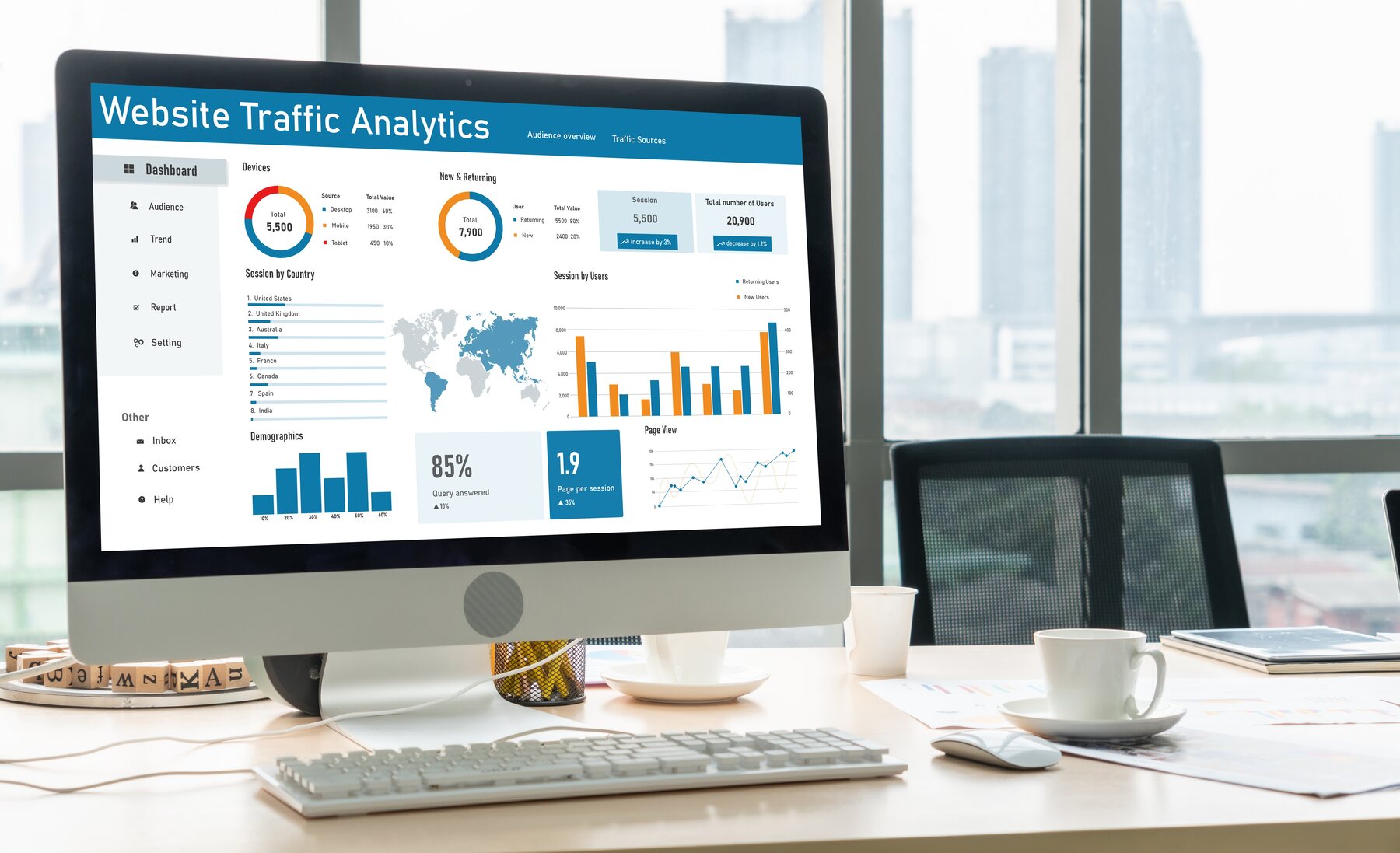
One of the most powerful tools to emerge in performance tracking is the real-time dashboard. These digital interfaces present KPI data in an intuitive, visual format that updates as new information becomes available. Rather than combing through pages of spreadsheets, business leaders and stakeholders can access simple, real-time views of what's working and what’s not.
Web and mobile applications, like those developed by Knockout Media, often include integrated dashboards customized to your KPI categories. These tools not only consolidate data from multiple departments or platforms but also offer alerts and predictive analytics that bring immediate attention to necessary areas.
Data Storytelling: Turning KPIs Into Business Narratives
Interpreting KPI data is more than number crunching—it’s about crafting a story that helps drive decisions. What are the metrics telling you? Are sales plateauing because of low user engagement? Could bounce rates indicate poor content relevance or a need for a UI/UX redesign? The art of transforming insights into action lies in contextualizing the KPIs to align with strategy and outcomes.
This is where Knockout Media’s expertise in interactive media and data visualization stands out. We don’t just deliver raw numbers—we help clients understand them through intuitive visuals, simplified reports, and smart dashboards that tell a compelling story others across the organization can act upon.
Laying the Groundwork for Customer Behavior Analysis
Tracking KPIs is just the beginning. Once foundational metrics are in place, businesses can go deeper into understanding why those numbers are what they are. For instance, if your KPI dashboard shows a drop in customer retention, what behaviors led to this trend? Were there signs of declining engagement, slower support ticket resolutions, or fewer repeat purchases?
The next logical step is to conduct a thorough analysis of customer behavior, which we'll explore in detail in the next section. By applying advanced data analytics models, businesses can uncover patterns, anticipate needs, and personalize customer journeys that drive loyalty and conversions.
To learn more about how Knockout Media can support your organization in building a data-driven strategy through KPI tracking, custom dashboards, and deep analytics, reach out to our team today. Let’s put your most critical metrics to work in ways that foster clarity, progress, and results.
Customer Behavior Analysis: Understanding What Customers Really Want
In today’s fast-paced digital marketplace, understanding customer behavior is no longer a luxury—it’s a necessity. As businesses continue to face rapidly shifting consumer preferences and an overflow of competitor options, the ability to anticipate what customers want can be the defining factor between thriving and merely surviving. This is where customer behavior analysis powered by advanced data analytics steps into the spotlight. It offers a crystal-clear insight into what drives customer decisions, what products or services they desire, and how best to engage them for maximum lifetime value.
Customer behavior analysis revolves around the practice of collecting, organizing, and interpreting data generated by customer interactions—both online and offline. From website clicks and social media engagement to purchase histories and support requests, every touchpoint produces valuable data. Knockout Media’s research and analytics services specialize in distilling this information into actionable strategies. By focusing on user behavior trends, businesses can make more informed decisions surrounding their product offerings, marketing methods, customer service models, and even overall business strategy.
Tracking Customer Journeys from Click to Conversion
The customer journey no longer follows a linear progression. Consumers often interact with a brand across multiple digital channels before making a buying decision. One might discover a product on Instagram, read reviews on Google, compare prices on competitor websites, and finally make the purchase through a smartphone app. Understanding this fragmented path requires robust behavioral tracking and interpretation tools.
Knockout Media designs custom web and mobile apps that allow businesses to track and analyze the full scope of a customer’s journey. By monitoring click paths, bounce rates, time on page, and conversion funnels, companies can identify where customers drop off and optimize those areas to improve retention. For example, if analytics reveal that users frequently abandon their carts during the checkout process, it could signal the need for UX improvements or clearer pricing information.
Segmenting Customer Data for Personalized Marketing
One-size-fits-all marketing is becoming obsolete. Today, consumers expect personalized experiences shaped by their preferences and past behavior. Data analytics enables businesses to segment their customer base into more granular groups based on demographic variables, behavioral patterns, purchasing history, and even psychographic data. Each of these segments can then receive tailored messages, offers, and product recommendations designed to resonate specifically with them.
Utilizing powerful SEO strategies and digital tactics through Knockout Media’s search engine optimization services, businesses can enhance their content marketing and pay-per-click (PPC) campaigns to target specific consumer behavior segments. For instance, returning visitors can be exposed to loyalty rewards, whereas first-time users might see an introductory offer. These micro-targeting capabilities help brands drive higher engagement and improve their conversion rates significantly.
Predictive Analytics: Anticipating Needs Before They Arise
Predictive analytics leverages historical data combined with machine learning algorithms to forecast future behavior. This innovative form of data interpretation allows businesses not only to understand what customers have done but also what they are likely to do. Imagine having the ability to forecast which customers are on the brink of churn or what products will become best-sellers next quarter. That’s the power of predictive modeling through advanced customer behavior analysis.
Through Knockout Media’s analytics services, businesses can deploy intelligent dashboards and tracking systems that automatically flag patterns and anomalies in real-time. This actionable intelligence allows decision-makers to proactively refine inventory levels, launch preemptive email campaigns, or introduce new features in digital products—all based on projected consumer behavior.
Feedback Loops and Continuous Improvement
Customer behavior analysis is not a one-time procedure—it’s an ongoing loop. As customer expectations evolve, constant monitoring ensures your business adapts right alongside them. Behavior data collected from interactive media experiences, like online quizzes, video engagement, or immersive storytelling, reveals deeper, more nuanced insights into what excites or deters users.
By setting up feedback mechanisms such as satisfaction surveys, Net Promoter Scores (NPS), or in-app reviews, businesses can validate behavioral patterns with direct voice-of-customer input. Merging qualitative feedback with quantitative insights creates a 360-degree view of the customer, positioning brands to deliver truly impactful experiences that inspire long-term loyalty.
Real-World Applications: From Retail to Education
Customer behavior data analytics isn’t limited to eCommerce or tech firms. Its applications stretch across virtually every industry. A retail business can track in-store foot traffic through apps and geolocation tools. Educational institutions can improve curriculum design by evaluating how students interact with online courses. Nonprofits can boost donor engagement by understanding what fundraising messages resonate most.
At Knockout Media, we work closely with clients across multiple sectors—from startups and SMBs to corporate enterprises and research institutions—helping them harvest behavioral data that fuels smarter decisions. Whether you aim to refine your sales funnel, pivot your messaging strategy, or customize your user interface, understanding the behavioral why behind the what is your foundational step.
Moving Forward with Customer Data-Driven Strategy
In the ever-growing sea of digital information, sifting out the gold requires intentionality, expertise, and the right tools. That’s where comprehensive customer behavior analysis comes into play. It sharpens your decision-making, aligns your offerings more closely with customer expectations, and uncovers new opportunities that might otherwise go unnoticed.
If you're ready to harness the full potential of your customer data, we invite you to explore our end-to-end digital solutions—from website development to SEO and advanced analytics. Contact Knockout Media today and let us show you how data can be transformed into your most powerful strategic asset.
Conclusion: Why Embracing Data Analytics Is No Longer Optional for Business Success
In an era defined by digital activity, global connectivity, and customer-centric models, data is not just another resource — it is a strategic asset that, when harnessed effectively, can transform how businesses operate, grow, and compete. Throughout this article, we’ve explored the multifaceted roles that data analytics plays in modern business decision-making — from uncovering consumer behavior patterns to informing product development, enhancing operational efficiencies, and supporting long-term planning.
But what’s the key takeaway? Simply put: companies that integrate data analytics into their core strategies position themselves to lead — not follow — in their industries. With the right tools and expertise, analytics provide businesses with a crystal-clear lens into their markets, internal processes, and future opportunities. And today, ignoring the power of analytics can mean more than just missed insights — it can mean lost market share, reduced profits, and strategic missteps that allow competitors to pull ahead.
Competitive Advantage Through Data-Driven Decision Making
At its core, the most compelling argument for data analytics is this: it gives businesses a competitive edge. Companies that prioritize data are consistently better equipped to respond to changing market dynamics, customer expectations, and emerging threats. They are able to pivot more quickly, test new ideas with minimized risk, and allocate resources more effectively. Data analytics shines a light on what works — and, just as importantly, what doesn’t — so that every decision is anchored in evidence rather than assumptions.
Take for example a business launching a new product. Without analytics, decisions about pricing, placement, or messaging might rely heavily on guesswork or past experiences. With a robust data strategy, however, businesses can analyze customer feedback, competitor pricing, demographic trends, and performance metrics in real time. This allows teams to test, learn, and iterate based on solid evidence — reducing risk and accelerating time-to-value.
Improving Operational Efficiency and Reducing Waste
Beyond strategic choice-making, data analytics profoundly impacts operational efficiency. Streamlining workflows, identifying process bottlenecks, and optimizing supply chains are all made easier and more effective through real-time data. For example, predictive analytics tools can forecast equipment failure before it happens, allowing for proactive maintenance and reducing costly downtime. Similarly, data can reveal patterns in customer support interactions, enabling organizations to address recurring issues and scale their support teams more effectively.
This efficiency doesn’t just improve performance — it reduces waste, both in terms of time and budget. That translates directly into increased profitability. By continuously analyzing internal performance across departments, companies can reduce overhead, cut unnecessary spending, and focus resources where they most effectively drive growth. This is especially important for small and mid-sized businesses, who may have limited budgets but limitless potential when armed with the right insights.
Organizations that partner with Knockout Media gain access to comprehensive data research and analytics solutions that are tailored to their industry, goals, and customer base. These solutions integrate with existing platforms and workflows while unlocking new levels of visibility and performance thinking.
Driving Revenue Growth with Audience and Market Intelligence
A well-defined analytics strategy doesn’t just cut costs — it drives revenue. Market segmentation, audience targeting, and customer lifetime value forecasting all become richer and more accurate with data. Businesses can craft more resonant messaging, experiment with pricing models, and design targeted cross-sell and upsell campaigns based on real-time intelligence.
When paired with a high-converting digital footprint — such as one created through custom website development or advanced mobile app solutions — the combination becomes an unstoppable growth engine. Businesses gain the ability to track user behavior across their digital platforms, analyze conversion paths, and identify which marketing efforts yield the highest ROI. Insights gathered from website analytics, application engagement, and search performance can feed directly back into targeted marketing strategies and sales outreach campaigns.
As competition intensifies across every sector, companies that fully embrace analytics are able to not only survive — but thrive. Informed decisions become smarter investments. Targeted engagement becomes measurable conversion. And once-siloed departments begin speaking a common language rooted in shared insights and a unified understanding of success metrics.
Positioning for Long-Term Growth in a Digital World
While immediate benefits of analytics are appealing, the long-term impact is where true transformation occurs. A culture built on data — where continuous improvement is driven by measurement and analysis — is one that evolves with the market rather than struggling to keep up. Organizations that embed analytics into product development, customer engagement, and internal governance are more agile and better prepared for what lies ahead.
Ultimately, data analytics represents a shift not just in tactics, but in mindset. It means moving away from reactive, gut-based decision-making to proactive, insight-fueled action. It allows businesses to be both bold and strategic — to dream big, but always with data to back it up.
Today’s digital-first landscape demands that organizations embrace this mindset across every dimension of their operations. That’s why Knockout Media offers specialized services designed to make advanced analytics accessible and actionable for businesses of all sizes. Whether you’re just starting your journey or looking to scale and optimize your current capabilities, our suite of digital solutions — including SEO, interactive media, and research and analytics — are built to empower your next phase of growth.
Getting Started: Partnering with Experts That Understand Your Vision
Whether you’re a small business owner, startup founder, non-profit executive, or corporate decision-maker, the good news is that you don’t have to embark on this data journey alone. With the right partner, the path to data maturity becomes clear, achievable, and aligned with your long-term goals.
Knockout Media specializes in helping organizations translate data into strategy. From crafting analytics-enabled websites to building bespoke dashboards that surface the metrics that matter most, we are committed to creating digital experiences that deliver measurable value. You can learn more about our custom development and app-building services here, or discover how our analytics expertise can drive insights tailored to your business here.
Ready to unlock the power of your data? Contact us today to start a conversation. Let’s build a data-driven future together — one where decisions are clearer, operations are more efficient, and your business is equipped not just to compete, but to lead.
In this rapidly accelerating digital economy, data isn’t just the new oil — it’s the fuel that powers innovation, customer experience, and financial success. By embracing its full potential with the help of a reliable partner like Knockout Media, businesses transform not only what they know — but what they’re capable of achieving.