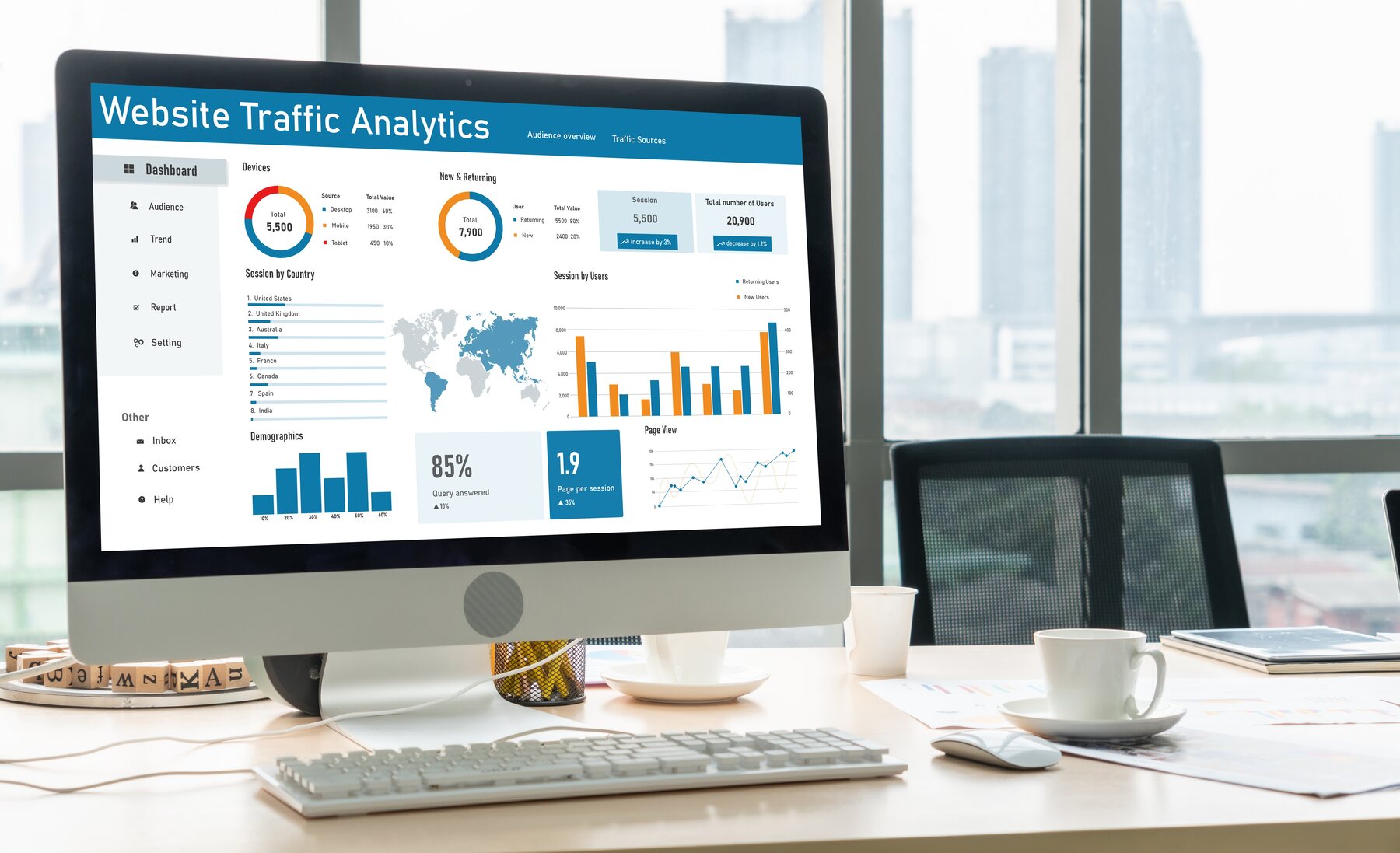

In an industry that has historically been slow to adopt new technologies, the construction sector is experiencing a transformative shift. Today, an increasing number of construction firms are embracing data analytics to elevate their project management capabilities. This evolution isn't just a passing trend — it's a critical, data-driven movement that is enabling companies to improve operational efficiency, significantly reduce costs, and proactively manage risks before they escalate into costly setbacks.
Construction projects are inherently complex, involving numerous stakeholders, fluctuating costs, sequencing challenges, supply chain dependencies, climatic uncertainties, and tight deadlines. Add to that the regulatory pressures and compliance requirements, and it becomes clear why data-driven project oversight is more vital than ever. The ability to collect, analyze, and act on real-time data is no longer an added advantage — it's a necessity for any construction firm aiming to stay competitive in today's digital age.
Traditionally, construction project management relied heavily on manual processes, spreadsheets, and siloed communication across departments. These outdated systems often led to miscommunication, data redundancy, misallocation of resources, and delays in execution. Countless studies and industry reports have pointed to poor project planning and inefficient management as leading causes of cost overruns and delays in the construction industry. According to a McKinsey Global Institute report, large construction projects typically take 20% longer to finish than scheduled and are up to 80% over budget. But with data analytics, these historical inefficiencies can now be mitigated effectively.
Data analytics transforms vast datasets — sourced from drones, sensors, wearables, Building Information Modeling (BIM), and enterprise project management software — into actionable insights. These insights empower project managers, engineers, and executives to make informed decisions throughout the lifecycle of a project. From initial planning and budgeting to procurement, on-site execution, and post-project evaluation, every phase can be optimized through the strategic use of analytics.
One of the key advantages of employing advanced data analytics lies in the ability to unlock predictive intelligence. By analyzing historical data sets, companies can forecast potential project risks such as safety hazards, delays, resource conflicts, or budget deficits. This foresight enables managers to prepare preventive strategies rather than react after the problem has occurred. As a result, the adoption of predictive analytics can substantially increase on-time and on-budget delivery rates — two of the most critical KPIs for any construction project.
Another noteworthy benefit is improved resource allocation. By utilizing real-time data feeds in tandem with analytics platforms, managers can obtain precise visibility into equipment usage, workforce productivity, and materials inventory. This helps reduce idle time, duplication of efforts, and wastage — directly impacting the bottom line. Using software and platforms built by digital solutions providers like Knockout Media, construction companies can automate the process of collecting and visualizing this data, offering centralized dashboards that update in real time.
The influence of data analytics also extends to safety management. Through the use of IoT devices and analytics-powered monitoring systems, companies can detect anomalies in machinery behavior, identify unsafe working conditions, and trigger real-time alerts to minimize accidents. A proactive safety regime not only ensures better compliance with occupational safety regulations but also enhances overall workforce morale — leading to a more productive work environment.
Furthermore, data analytics facilitates better collaboration among stakeholders. With intelligent data management systems, architects, engineers, contractors, and clients can work from synchronized data sets, keeping all parties on the same page. Practices like cloud-based documentation, integrated project management platforms, and mobile access to key project metrics are rapidly becoming the norm. Firms investing in mobile application development and custom web portals are discovering that seamless data sharing significantly cuts down on communication lags and improves accountability.
Despite these benefits, many construction firms have yet to fully harness the power of analytics due to perceived barriers such as implementation costs, data security concerns, or the required shift in traditional workflows. However, organizations like Knockout Media are helping to bridge this gap by offering tailored digital solutions that align with the specific needs of construction businesses. Whether it’s creating scalable software systems, custom dashboards, or intuitive data visualization tools, companies can leverage Knockout Media’s full range of services to initiate or accelerate their digital transformation journey.
As more firms witness tangible returns from their analytics investments, the pace of adoption is expected to accelerate across the industry. Analytics is no longer just a back-office tool for cost estimation or time tracking — it’s becoming the engine that drives decision-making, innovation, and value creation throughout the construction process. Whether you're a general contractor, a construction manager, or a project investor, embracing analytics is no longer optional; it’s imperative for staying ahead of the curve.
In this article, we'll explore exactly how data analytics is revolutionizing construction project planning in the next section, where we will examine how intelligent data utilization improves planning accuracy, budget forecasting, and resource scheduling.
How Data Analytics Improves Planning in Construction Project Management
In today’s highly competitive and deadline-driven construction industry, effective planning is the cornerstone of successful project management. With the increasing complexity of projects, fluctuating supply chain variables, labor considerations, and evolving regulatory standards, project managers can no longer rely solely on traditional methods or manual spreadsheets. Leveraging data analytics in construction project planning not only enhances accuracy but also optimizes decision-making across every phase of a project—from ideation to completion.
At its core, data analytics enables project managers to base their decisions on real-time information and historical data rather than guesswork or outdated trends. With state-of-the-art platforms and tools provided by digital solution partners like Knockout Media, construction companies can implement advanced data collection and visualization methodologies to make smarter, faster, and more confident decisions that streamline operations and improve profitability.
Using Historical Data to Inform Future Planning
One of the most powerful applications of data analytics in construction planning is the ability to harness past project data. Every construction project generates a wealth of information—cost breakdowns, timelines, resource allocations, weather impacts, labor utilization, subcontractor performance, equipment usage, and more. Collecting and analyzing this data reveals patterns that can be instrumental in planning future projects with greater precision.
For example, if historical data indicates that a particular subcontractor consistently misses deadlines or goes over budget, that insight enables managers to make informed decisions on whether to work with the same provider in future projects. Similarly, understanding the seasonal impacts on material availability or labor productivity allows teams to plan their schedules and procurements more effectively.
Moreover, predictive analytics powered by machine learning—tools that are increasingly being integrated into custom software solutions from companies like Knockout Media—can identify likely outcomes based on historical datasets. These models can forecast delays, budget overruns, or labor shortages before they occur, providing valuable lead time to plan contingencies or modify project scopes. This proactive approach signals a significant shift from reactive firefighting to strategic foresight in construction management.
Enhanced Scheduling and Resource Management
Planning in construction is synonymous with scheduling. Poorly planned schedules can derail even the most promising projects, resulting in cost overruns and extended project durations. Data analytics brings surgical precision to scheduling by allowing planners to evaluate multiple scenarios based on real-world constraints and past performance metrics.
Data-driven scheduling empowers teams to map out accurate timelines by correlating task durations, lead times for materials, machinery allocations, and workforce availability. The net result is a more resilient project plan that accommodates real-world unpredictability. This level of sophistication is made possible through tailored application development, such as the web and smartphone applications offered by Knockout Media, which put real-time data into the hands of project managers on construction sites and in office settings alike.
Incorporating interactive dashboards, like those powered through interactive media solutions from Knockout Media, allows stakeholders at all levels to gain insights into project progress, bottlenecks, and optimization opportunities. Whether it’s identifying underutilized equipment or reallocating crews to high-impact areas, the visibility enabled by analytics facilitates dynamic adjustments that ensure schedules remain on track.
Improving Budget Forecasting and Cost Allocation
Effective planning hinges not just on timing but on accurately forecasting and allocating budgets. Cost overruns are a prevalent issue in the construction sector, often stemming from poor budget estimation and unforeseen expenses. Data analytics eliminates much of this guesswork by analyzing detailed cost data from prior projects, enabling managers to develop more accurate and nuanced financial plans.
Using data from previous projects, analytics platforms can establish realistic cost baselines, accounting for variables such as inflation, market price fluctuations, regional variations in labor costs, and supplier reliability. These insights inform critical budgeting decisions and help establish financial buffers where necessary. This financial transparency is particularly invaluable when pitching projects to investors or stakeholders who demand accountability and data-backed projections.
Furthermore, integrated data solutions can track spending in real-time, flagging discrepancies, detecting wastage, or identifying cost-saving opportunities as the project unfolds. Companies that partner with all-in-one digital service providers like Knockout Media can take advantage of customized modules that fit the unique budgeting workflows of construction firms, ensuring that every dollar is accounted for—and strategically used.
Design Optimization and Early-stage Planning
Data analytics is also transforming how design and pre-construction planning is conducted. By integrating data-driven modeling tools, architects and engineers can simulate project designs and test multiple configurations before finalizing blueprints. These simulations assess everything from structural integrity to environmental impact, sunlight exposure, and energy consumption.
Early insights from these simulations enable teams to select the most efficient, cost-effective, and sustainable designs, saving time and money during later execution stages. This level of granularity in design planning wouldn’t be possible without robust data infrastructure—an area where Knockout Media's analytics and software expertise truly shines. By building integrated platforms for modeling and simulation analysis, teams can access all relevant data from a centralized, cloud-based interface.
Ultimately, this minimizes surprises and scope changes later in the project lifecycle—a common source of project delays and budget blowouts. Advanced planning tools allow stakeholders to visualize the end product, evaluate trade-offs of different options, and navigate complex decision trees with clarity and confidence.
Real-Time Data Feedback Loops
One hallmark of modern construction planning with analytics is the introduction of real-time feedback mechanisms. Through interconnected systems featuring IoT (Internet of Things) sensors, mobile reporting tools, and centralized dashboards, project managers can gain up-to-the-minute insights into everything from weather conditions to labor productivity on site.
This constant feedback loop ensures that data analytics is not a one-time planning tool but an ongoing operational companion. For example, if equipment downtime is recorded or unexpected delays arise, the analytics engine alerts stakeholders immediately to make informed decisions without day-long lags. Such agility is crucial in high-stakes megaprojects or tightly scheduled urban developments, where even minor setbacks can have ripple effects on the entire schedule and budget.
By leveraging data in this way, construction teams can transform planning from a static, linear process into an adaptive, agile discipline—one that evolves dynamically in response to in-the-moment realities and continuously improving data sets.
To explore how your construction company can benefit from advanced planning tools and custom analytics platforms, visit Knockout Media’s contact page for more information or to schedule a consultation with one of our digital solutions experts.
Next: Risk Management Through Analytics
While efficient planning lays a strong foundation for construction project success, it is equally important to anticipate and actively manage risks throughout the execution phase. In the next section, we’ll explore how data analytics empowers project managers to identify, measure, and mitigate potential threats before they escalate into costly problems.
Risk Management Through Analytics in Construction Project Management
In the complex and high-stakes world of construction project management, risk is not just a theoretical concern—it is a daily operational reality. From budget overruns and scheduling delays to safety hazards and compliance issues, construction professionals face a multitude of risks that can derail even the most carefully planned projects. However, the integration of data analytics tools and methodologies has heralded a new era in proactive risk management. When leveraged effectively, analytics can help identify, assess, and mitigate risks before they impact project timelines, budgets, or outcomes.
The Evolution of Risk Management in Construction
Traditionally, project risk was managed through anecdotal experience, retrospective analysis, and best-guess estimations. Project managers relied heavily on historical data and intuition to foresee potential pitfalls. While this experience-based approach still holds value, it is no longer sufficient in today’s highly digitized and interconnected environment. Addressing modern construction risks requires real-time monitoring, predictive modeling, and quantified insights—areas where data analytics excels.
Today, leading construction firms are increasingly integrating smart technologies and data-driven tools to monitor thousands of data points from planning to execution. These inputs—ranging from contractor performance and weather patterns to supply chain disruptions and equipment telemetry—form a data foundation that can be mined to uncover hidden risks and preemptively address potential issues.
Identifying Risk Early Through Predictive Analytics
One of the most transformative capabilities introduced by data analytics is predictive modeling. By using historical and real-time data to forecast future outcomes, construction managers can spot trouble areas before they evolve into major setbacks. For instance, by analyzing past project data, predictive models can estimate the likelihood of cost overruns based on the complexity of project components, contractor workload, or procurement delays.
Additionally, machine learning algorithms can recognize patterns in past safety incidents, helping to predict areas of higher injury probability. If certain weather conditions or shift arrangements have historically resulted in increased accidents, predictive analytics will surface those insights, allowing project managers to implement necessary interventions such as changing work schedules or deploying additional safety equipment in advance.
Another example is subcontractor performance analytics. By evaluating on-time delivery, work quality, and resource utilization, managers can assess the risk of relying on specific vendors. Data visualization tools then help communicate these risks clearly across departments, enhancing transparency and collaborative decision-making—a key component of modern risk prevention strategies.
Real-Time Monitoring Reduces Uncertainty
While prediction is valuable, ongoing risk management requires continuous oversight. This is where real-time analytics plays a critical role. With data automatically collected from IoT devices, sensors, and project management platforms, teams can monitor key metrics such as site productivity, material availability, environmental conditions, and labor hour consumption in real time.
Alerts can be set within smart dashboards to flag anomalies the moment they occur—for example, if machinery exceeds safe operating temperatures or if there's a drop-off in workforce efficiency during a critical phase of the build. Catching these kinds of deviations early enables dynamic risk mitigation that can prevent costly project derailments.
At Knockout Media, we specialize in developing custom web-based dashboards and mobile apps that integrate with a client’s digital infrastructure to provide real-time analytics. These tools empower construction managers by centralizing data visualization and significantly reducing the lag between risk identification and response.
Scenario Planning and Simulation
Data analytics also empowers project managers to build simulation models that explore potential risk scenarios before breaking ground. This form of scenario planning enables stakeholders to evaluate their options under various 'what-if' situations, such as material shortages, labor strikes, or regulatory changes.
Using simulation models, project leaders can examine how different decisions will affect scheduling, budgeting, and resource allocation. These insights do more than short-circuit risks—they foster a culture of preparedness and agility, resulting in a construction team that’s more responsive and resilient when faced with real-world issues.
Better Communication and Accountability
Another key benefit of data-driven risk management is enhanced communication and accountability. When all project risks and progress indicators are visualized clearly through analytics platforms, it becomes easier for stakeholders—including architects, contractors, vendors, and clients—to stay aligned on expectations, milestones, and risk responses.
This contributes to what is often called a 'single source of truth'—a centralized database where all parties access synchronized project data rather than working in silos. Such transparency minimizes confusion and promotes quick corrective actions whenever risks surface. In recent years, Knockout Media has partnered with enterprise and SMB clients to implement customized web portals and interactive dashboards tailored to rigorous construction workflows.
Further, inherent in good risk management is traceability. If an issue does occur, analytics provides a detailed data trail that helps pinpoint the cause and assess liability more accurately. This becomes invaluable not only in damage control but also in legal and compliance contexts, where documentation and accountability matter.
Risk Management as a Competitive Advantage
Ultimately, integrating data analytics into construction risk management is not just about avoiding project complications—it’s about achieving strategic differentiation. Companies that minimize risks effectively gain reputational strength, reduce insurance costs, and deliver projects more profitably. In a highly competitive industry, these factors serve as significant advantages when bidding for new projects or seeking partnerships.
Forward-thinking construction managers now view digital transformation not as an operational upgrade but as a strategic investment. When organizations partner with firms like Knockout Media to implement advanced data research and custom digital tools, they equip themselves to outperform competitors in prediction accuracy, risk mitigation, and execution efficiency.
Leading into Cost Tracking and Budgeting
While risk management is central to project success, its close cousin—cost control—is equally critical. The line between avoided risk and optimized budget is often thin, and the two are deeply interconnected. As we transition to the next section, we will explore how advanced data analytics solutions can also be leveraged for accurate cost tracking and stringent budgeting. From preventing scope creep to automating expense reporting, analytics provides unmatched clarity into construction financials, paving the way for smarter fiscal decisions and stronger ROI.
Cost Tracking and Budgeting: The Backbone of Efficient Construction Management
Construction projects are notoriously complex, often involving dozens of contractors, hundreds of suppliers, and thousands of moving parts. One of the most daunting challenges facing project managers is keeping costs under control while ensuring optimal resource utilization throughout the construction lifecycle. Traditionally, budget tracking in construction relied heavily on spreadsheets, manual reports, and periodic status meetings. However, as projects grow more complex and stakeholders demand greater transparency, data analytics has emerged as an indispensable tool for cost tracking and budget management.
Using advanced data analytics, project managers can access real-time financial insights, forecast potential overruns, and make data-driven decisions to align spending with strategic goals. In short, analytics transforms cost tracking from a reactive process into a proactive discipline, enabling organizations to minimize waste, improve accountability, and protect profit margins. Below, we delve deeper into how this technological shift is reshaping budgeting practices in the construction industry.
Real-Time Monitoring for Budgetary Control
Data analytics platforms aggregate data from multiple sources—such as procurement systems, timesheets, equipment logs, and project management tools—into a centralized dashboard. This real-time visualization allows project managers and financial stakeholders to track costs as they incur, rather than waiting until budget reviews or post-milestone evaluations to identify problems.
For instance, with an integrated analytics solution, a project lead can immediately detect if a specific subcontractor's hourly rates are accumulating faster than projected, or if material costs are veering off budget. This real-time feedback loop enables corrective actions—such as renegotiating supplier contracts, reallocating labor, or adjusting project scope—before small discrepancies spiral into million-dollar overruns.
Companies like Knockout Media specialize in building these kinds of dynamic dashboards as part of their custom web and mobile applications. These applications not only track costs but also improve collaboration between managers, accountants, and field teams by keeping everyone on the same page, literally and figuratively.
Predictive Cost Modeling and Forecasting
Beyond basic tracking, data analytics excels in forecasting. Traditional construction budgeting often falls short due to unforeseen conditions—ranging from supply chain delays and weather disruptions to labor shortages and regulatory changes. However, with the use of predictive analytics models, historical project data can be analyzed to anticipate such issues.
Imagine having the capability to forecast the final project cost with 85% accuracy just one quarter into the build. This is made possible through machine learning algorithms that continuously refine their predictions as new data enters the system. Anomalies, patterns, and deviations are flagged instantly, helping managers identify where budgets are likely to break down in the future—long before it impacts the bottom line.
Predictive engines can also conduct "what-if" analyses to simulate various risk scenarios. Want to know how a 10% hike in steel prices will impact your $12M hospital build? Or how reducing part-time labor by two hours a week could accelerate construction by 5%? Predictive tools make it possible to answer these questions without unsettling the actual project framework. When implemented through a robust digital infrastructure, as offered through Knockout Media’s digital solutions, these analytical insights become a cornerstone of strategic project planning.
Improved Supplier and Subcontractor Accountability
Construction projects are heavily reliant on third-party vendors, subcontractors, and consultants. Lack of transparency and delays in invoicing can wreak havoc on budgets. Data analytics enforces accountability by providing granular visibility into expenditures.
For example, a dashboard built by a digital media firm like Knockout Media can tie each expense back to specific line items, suppliers, and project milestones. It becomes easier to track whether deliverables meet contractual requirements—if a subcontractor quoted 500 man-hours and charged for 600, automated alerts can be triggered for the project manager to review.
Moreover, advanced analytics platforms can rank suppliers and subcontractors based on cost efficiency, on-time delivery, and reliability. A pattern of cost overruns associated with a specific vendor can be identified across multiple projects, prompting contract renegotiations or a change in sourcing strategy. This fosters a culture of accountability while reducing financial leakage through improved procurement practices.
Resource Optimization and Cost Efficiency
Every construction project involves countless resources: labor, equipment, materials, and overhead. Misallocation of any of these elements can lead to both direct and indirect cost escalations. Using data analytics, managers can pinpoint areas where resources are underutilized or excessively consumed.
For instance, geospatial analytics integrated into mobile apps can determine how often certain machines are idle versus being used. Labor analytics can reveal if specific crews are outperforming or underachieving relative to benchmarks. These insights allow on-site managers to reassign crews, reallocate tools, or consolidate activities to avoid redundant costs. Over time, such optimization translates into substantial savings and productivity gains—a compelling case for embracing modern web-based development tools that support operational transparency.
In some cases, proactive cost tracking has even enabled projects to come in under budget, as teams rapidly respond to insights provided through data dashboards. The cumulative effect of such optimizations across multiple projects can reshape an organization’s profitability profile.
Compliance and Audit Preparedness
Another often-overlooked advantage of analytics-driven cost tracking is improved regulatory compliance and audit readiness. With construction firms increasingly operating under regulatory frameworks at municipal, state, and federal levels, maintaining transparent and auditable financial records is non-negotiable.
Data analytics systems automatically capture audit trails, log transactions, and store versions of financial reports. Not only does this make it easier to demonstrate compliance to oversight bodies, but it also mitigates risk associated with financial misreporting. When paired with interactive visualizations, auditing teams can filter reports by vendor, project phase, or material type to quickly validate expenditures—saving valuable time during financial audits.
Moreover, compliant recordkeeping strengthens stakeholder trust, bolsters the company's brand, and can be a vital competitive differentiator when bidding on government contracts or large-scale joint ventures.
Looking Ahead: The Strategic Imperative of Digitized Cost Control
Cost tracking and budgeting are no longer back-office functions limited to accountants and finance teams. Thanks to advanced data analytics, they have become strategic levers for enhancing project outcomes, controlling risk, and protecting margins in construction project management.
Whether it's achieving real-time visibility, forecasting with greater precision, improving vendor accountability, or ensuring audit compliance, analytics introduces a level of rigor and agility that traditional systems cannot match. By partnering with a full-service digital solutions firm like Knockout Media, construction firms can develop custom applications that integrate deeply with their existing workflows and create a centralized hub for financial data that supports smart decision-making at every stage.
Ultimately, as we transition into the conclusion of our discussion, it becomes clear that big data and analytics are revolutionizing construction project management—not just through cost control, but by unlocking a new era of operational excellence driven by insight, foresight, and digital innovation.
Conclusion: Embracing the Power of Data Analytics in the Construction Industry
As the construction industry continues to evolve, the role of data analytics in project management is becoming increasingly indispensable. With the emergence of big data, machine learning, and predictive analytics, construction firms now have access to tools that can unlock unprecedented levels of accuracy, efficiency, and foresight. From improving resource allocation to predicting project risks, the integration of data analytics is no longer a luxury—it is rapidly becoming a cornerstone of modern construction management strategy.
Traditional construction project management often relies heavily on static spreadsheets, delayed reporting, and fragmented communication. In contrast, data analytics enables real-time decision-making through centralized dashboards, live updates, and empirical performance monitoring. The ability to collect, structure, and analyze vast volumes of data empowers construction managers and stakeholders to understand project conditions in-depth, identify inefficiencies early, and make data-informed decisions that keep projects on track, within budget, and aligned with strategic goals.
Reducing Inefficiencies through Data-Driven Processes
One of the most significant advantages of implementing data analytics in construction project management is the dramatic reduction of inefficiencies. Delays, resource mismanagement, cost overruns, and miscommunication are perennial challenges in the construction landscape. However, when armed with well-structured data and analytical models, project managers can proactively uncover bottlenecks and systemic issues before they become critical roadblocks. This allows timely interventions that safeguard both timelines and budgets.
Tools such as predictive analytics can forecast future delays based on historical performance or current trends. For instance, by analyzing workforce productivity data from previous projects, a construction firm can anticipate labor shortages during crucial project phases—allowing time for hiring and training. Similarly, by monitoring supply chain data in real-time, managers can preempt procurement issues and deploy contingency plans. This operational agility is only possible with a robust data analytics framework in place.
At Knockout Media, we specialize in helping businesses—including construction firms—leverage advanced data research and analytics tools to enhance decision-making and optimize outcomes. By developing customized dashboards, data pipelines, and visualization tools, we enable organizations to turn raw data into actionable intelligence that drives measurable improvements.
Enhancing Decision-Making with Real-Time Insights
In any major construction project, thousands of variables are in constant flux. Weather, labor availability, material pricing, site conditions, permitting timelines—these factors frequently impact project milestones. Without a centralized way to track and interpret developments in real time, decision-making becomes reactive, often leading to escalated issues. Data analytics eliminates this uncertainty by providing timely alerts and visualizations that clarify complex variables.
Data-driven construction companies can take advantage of predictive modeling and machine learning algorithms to simulate different project outcomes. Whether it’s evaluating the impact of sourcing alternative materials or adjusting schedules based on seasonal forecasts, powerful analytical tools can assist in weighing options and selecting the most strategic path forward. Moreover, integrating these analytics with Building Information Modeling (BIM) provides spatial and design-related insights that significantly contribute to more efficient planning and execution.
When paired with custom-built web and mobile applications, project stakeholders can access these insights from virtually anywhere—streamlining communication channels and improving responsiveness. At Knockout Media, we build scalable applications tailored to the unique workflows of construction and engineering companies, ensuring that your data is not only available but actionable at all levels of your team.
Driving the Future of Smart Construction
As industries worldwide shift toward smart technologies and digital transformation, the construction sector is poised for a similar revolution. The adoption of IoT-enabled devices, drones, AI, and cloud-based project management tools are all fueling an environment where data is continuously generated, aggregated, and analyzed in real-time. This smart construction environment thrives on collaboration between technologies—and analytics serves as the unifying element that brings it all together.
Not only does this data revolution enhance internal operations, but it also improves transparency across all stakeholders, including clients, contractors, suppliers, and regulators. With enhanced reporting, automated compliance checks, and streamlined documentation, data analytics reduces administrative burdens while improving accountability. This ultimately leads to better relationships, stronger reputations, and higher levels of customer satisfaction.
Through Knockout Media’s suite of digital solutions, we support construction firms in building the technological foundation necessary for this transformation. From web development to interactive media solutions that improve stakeholder engagement, our team works directly with clients to implement tools that scale as their operations grow and diversify.
Looking Ahead: Sustainability, Safety, and Strategic Growth
Looking toward the future, data analytics will play an even greater role in helping the construction industry evolve sustainably and safely. By analyzing environmental data, companies can manage energy consumption, reduce waste, and choose eco-friendly materials. Safety protocols can also be enhanced by analyzing incident reports, near-miss data, and jobsite conditions to predict and prevent injuries before they occur. Data analytics aligns with not just operational goals, but the broader ethical and environmental responsibilities of modern businesses.
Furthermore, as competition in the sector intensifies, those who invest early in data capabilities will enjoy a long-term strategic advantage. They’ll be better positioned to win contracts, manage risk, and scale operations more smoothly. Whether you’re a small-scale builder or a multinational construction firm, embracing a data-first approach will be critical to future-proofing your business.
If you’re ready to begin your journey into data-driven construction management, consider partnering with a digital solutions expert like Knockout Media. From advanced analytics to custom-built platforms, we offer comprehensive tools and services designed to meet the challenges of construction in the digital age. Learn more about how we serve construction businesses—or contact us today to schedule a consultation and take the first step toward smarter project outcomes.
Final Thoughts
In summary, big data and analytics are not just enhancing decision-making in construction project management—they’re redefining what’s possible. By tapping into the power of data, construction companies can dramatically improve efficiency, reduce costs, and gain a strategic edge in a competitive landscape. Whether it’s through real-time analytics dashboards, predictive modeling, or integrated software solutions, the future of construction lies in data-driven intelligence. As technology and demands evolve, your ability to adapt and innovate will determine your success. Don’t get left behind—embrace data analytics and let Knockout Media help you build the future.