
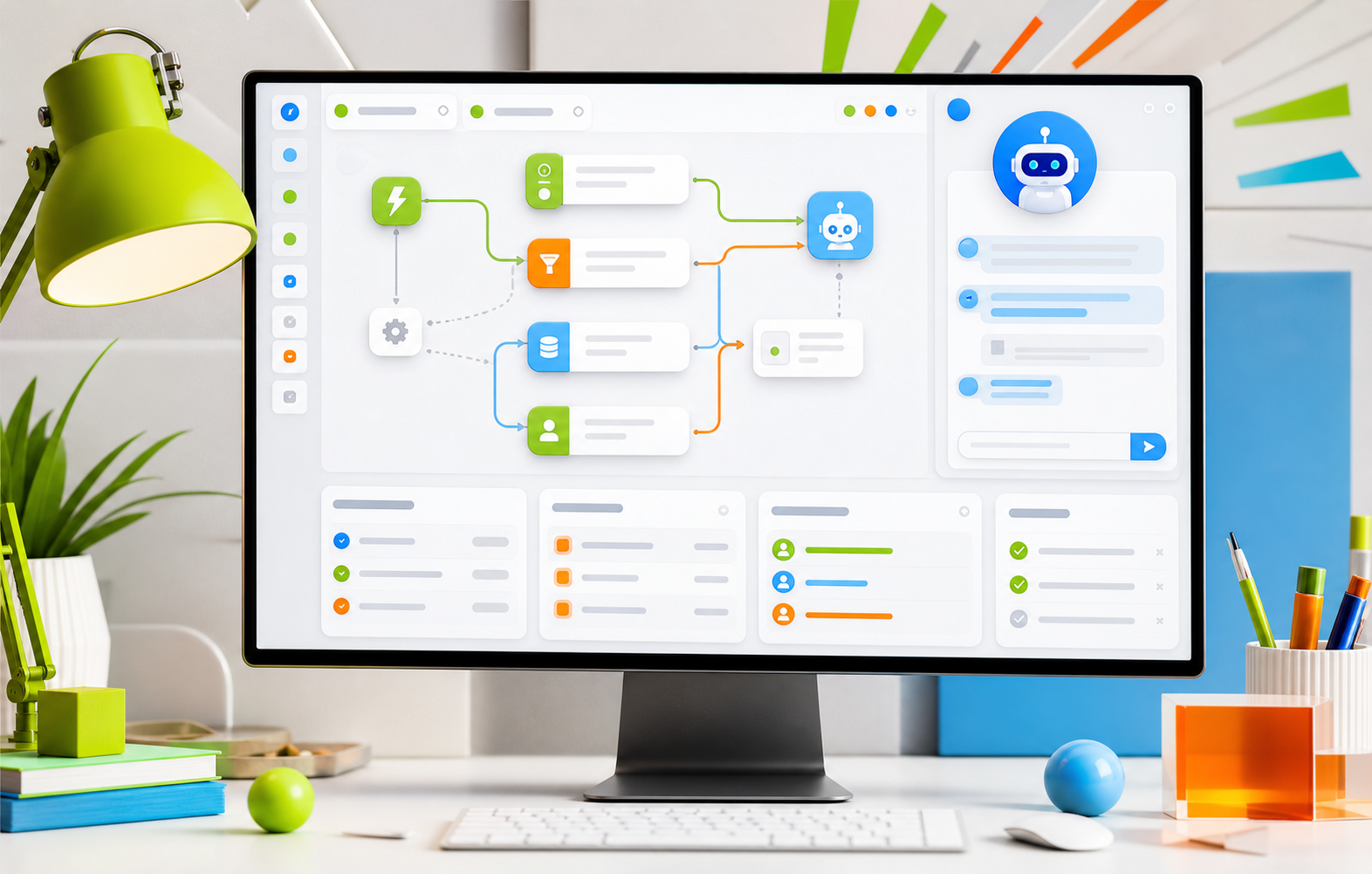
AI becomes useful when it is attached to a specific piece of work. For a small team, that usually means reducing the time spent reading, sorting, rewriting, or moving information between systems.
Start with a task, not a tool
Look for a task that happens often, follows a recognizable pattern, and already has a human process for checking the result. Good starting points include summarizing intake notes, classifying incoming requests, extracting fields from documents, drafting routine follow-ups, or flagging missing information.
The task should have a clear next action. A summary that nobody uses is not automation; it is another thing to read.
Keep the human decision visible
AI is strongest at producing a useful first pass. The workflow should make it obvious what came from the model, what source material was used, and who approves the result before it affects a customer or an important business decision.
- Define the input and the expected structure.
- Decide what a person must review.
- Plan what happens when the model is uncertain.
- Measure whether the workflow actually saves time.
Choose a narrow first win
A focused workflow is easier to test, easier to improve, and less risky than an assistant that claims to understand everything. Once one useful task is reliable, the same foundation can support related steps.